
Cart is empty
NEOCLASSICAL GOLD AND ENAMEL TOOTHPICK BOX, CIRCA 1790
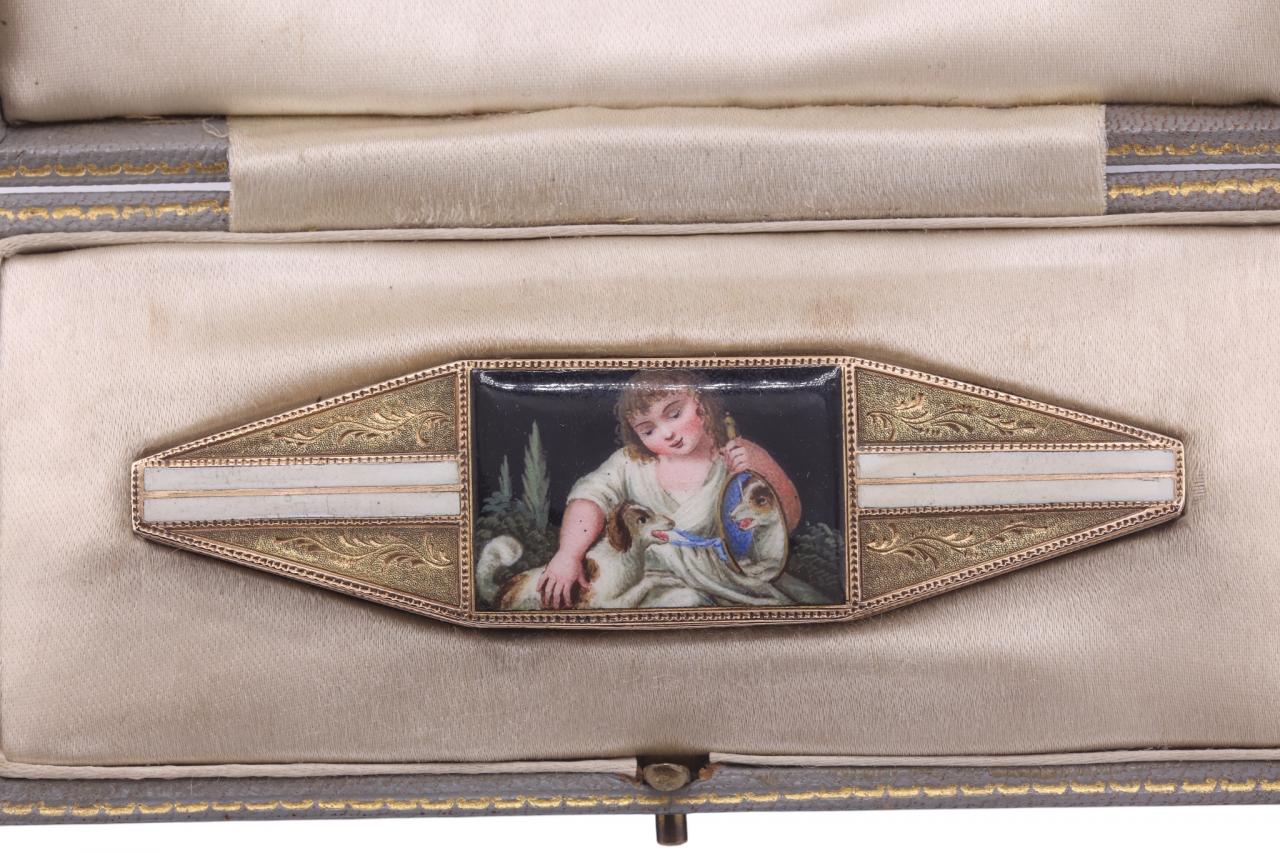
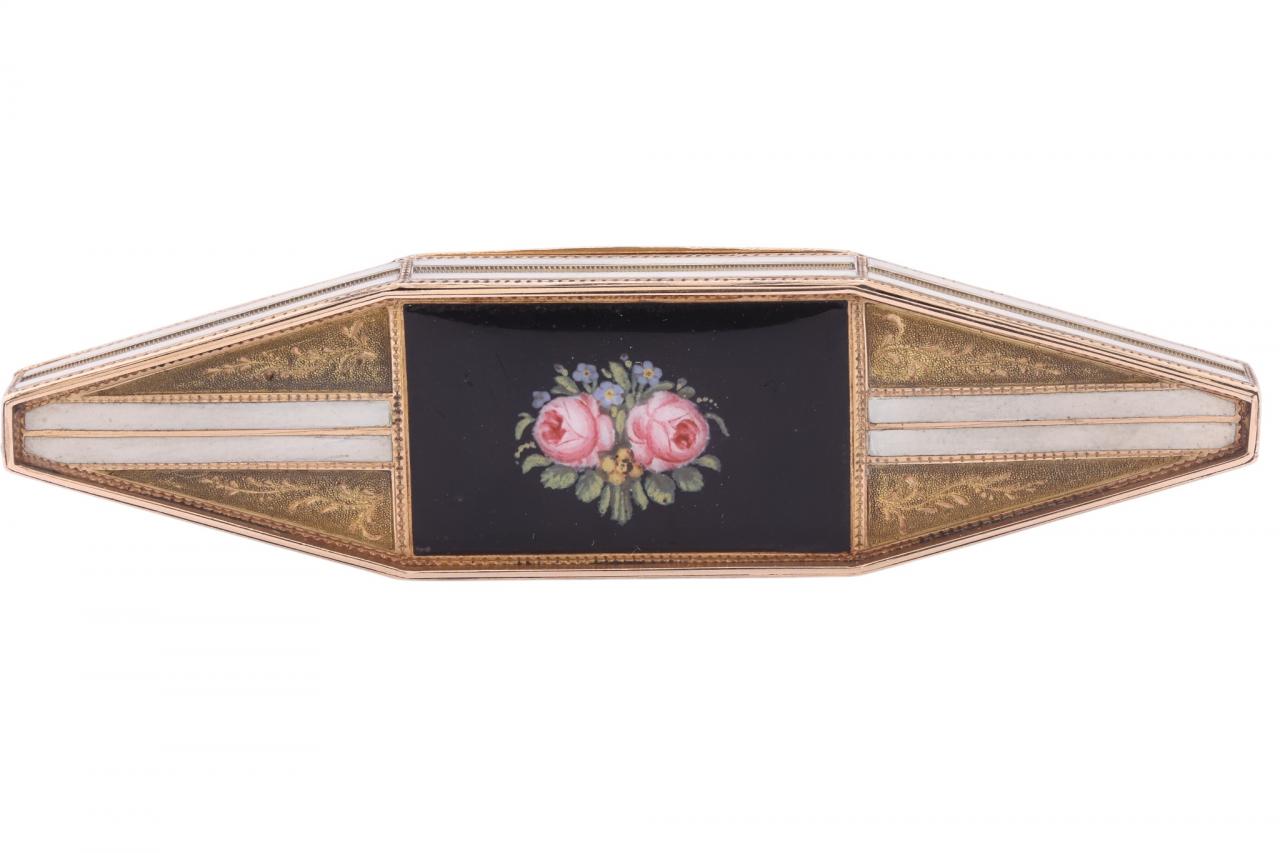
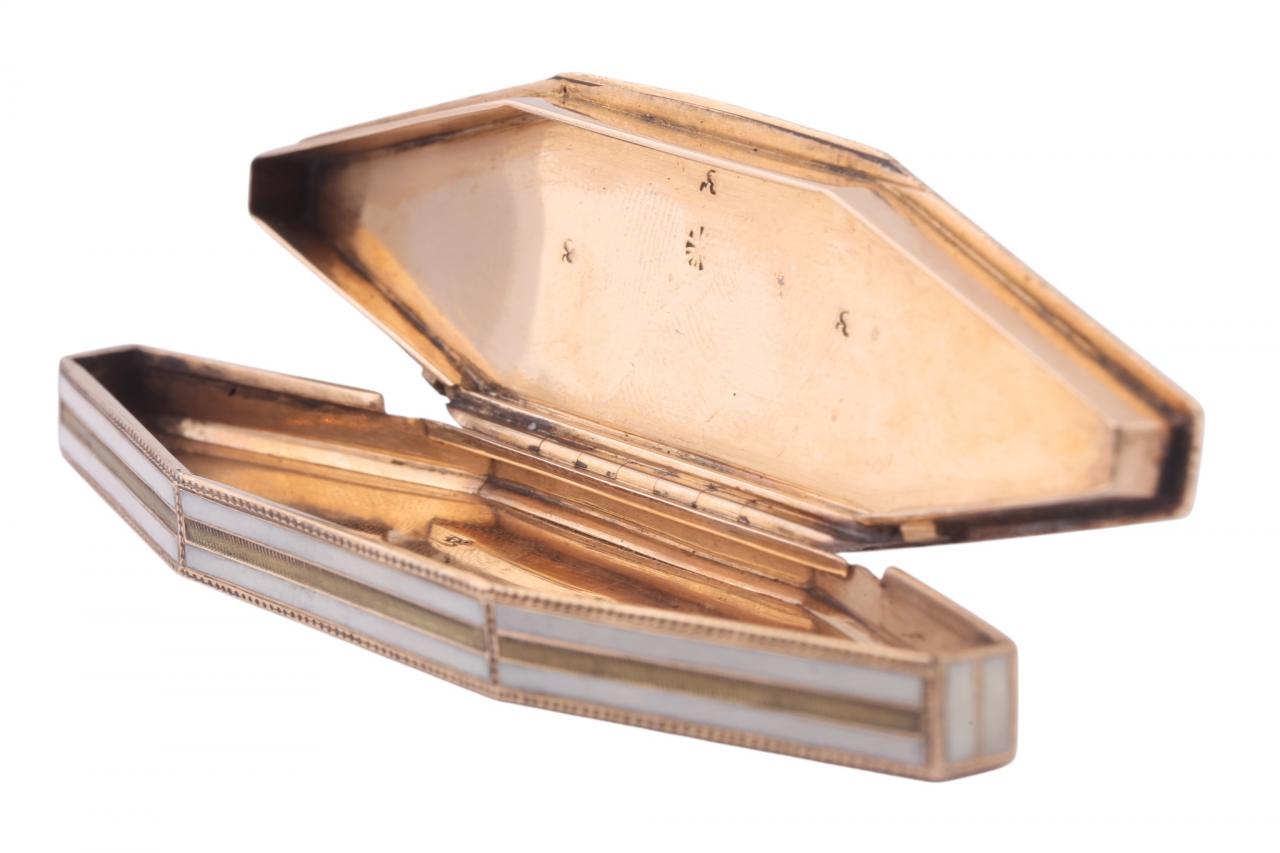
Neoclassical gold and enamel toothpick box framed throughout with milgrain borders, centred with a finely painted rectangular enamel miniature depicting a child in classical drapery presenting a mirror to a spaniel, flanked by tapering navette-form panels decorated with hand-engraved foliate motifs on an engine-turned ground and inlaid with parallel bands of white enamel, the sides decorated with matching horizontal white enamel striping, the reverse centered with a secondary rectangular enamel panel depicting pink roses and blue forget-me-nots against a black ground, opening on a long hinge to a polished gold interior marked inside base and cover with crossed S and sunbursts, inner flange scratch-marked 652B BHIH, tested 14 karat gold, accompanied by a fitted leather box stamped for Wartski, circa 1790.
Why we are obsessed:
In 18th-century European high society, an exquisitely crafted toothpick box (boîte à cure-dents) was among the rarest of personal luxuries. Beyond their role in courtly dining etiquette, these specialized vanity objects served as portable statements of immense wealth, refined taste, and social prestige, with the finest examples commissioned from master goldsmiths to display in noble courts.
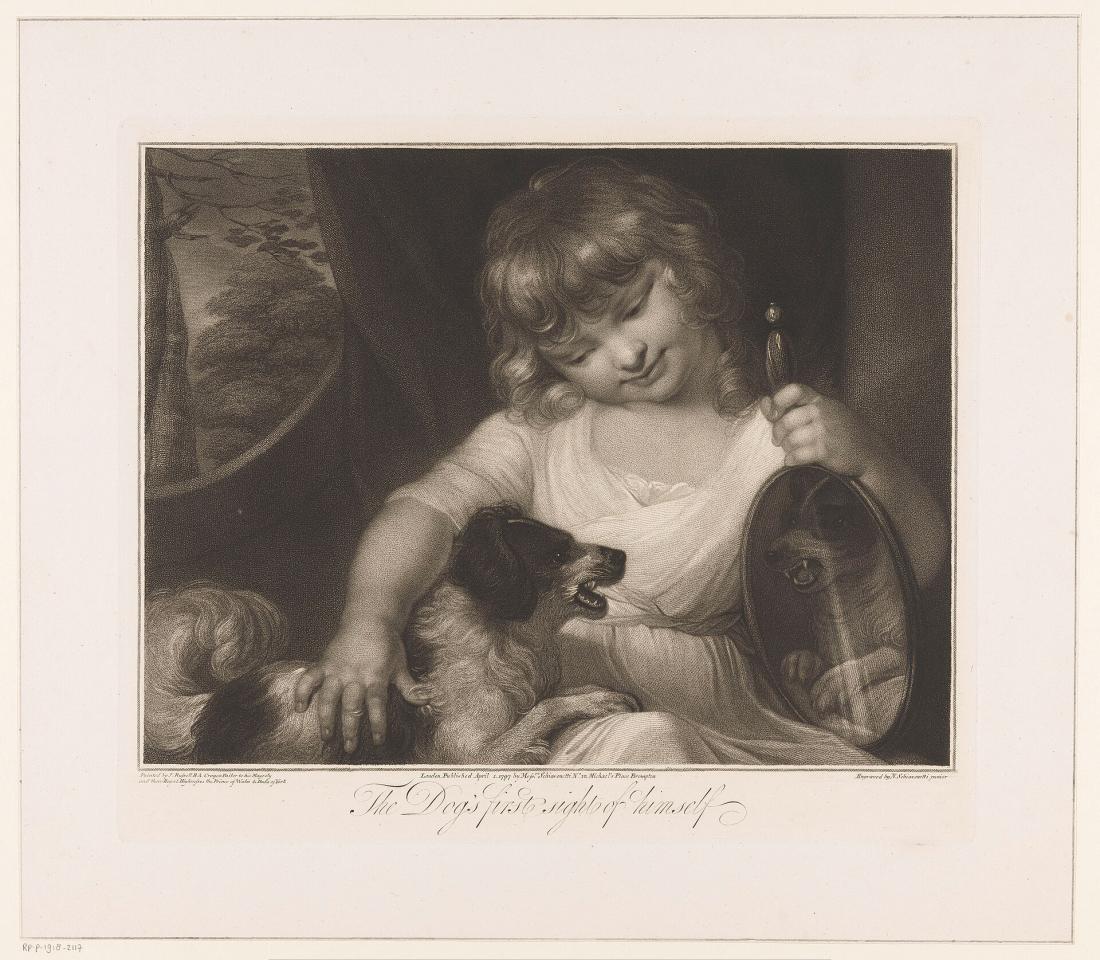
At the center of this fine gold and enamel toothpick box is a miniature depicting “The Dog’s First Sight of Himself,” adapted from the celebrated pastel by John Russell, R.A., official painter to King George III.
Crafted by Frères Jordan, Prussian Crown Jewellers whose works grace the Victoria & Albert Museum and the British Royal Collection Trust, the box showcases engine-turned gold, crisp white enamel striping, and a secondary floral enamel miniature on the reverse. Accompanied by a fitted presentation case stamped for Wartski.
Product Type:
Other
We offer free worldwide delivery. It is always tracked. We almost always ship the piece within 3 days. Then delivery is usually 3-5 days. If we need to adjust the size of a piece beforehand it may take a little longer. The shipping is fully insured until received or signed for. If you are in a rush let us know at [email protected] and we will try and accommodate!




 eCommerce Development