
Cart is empty
Georgian Silver and Gold Three Stone Diamond Ring
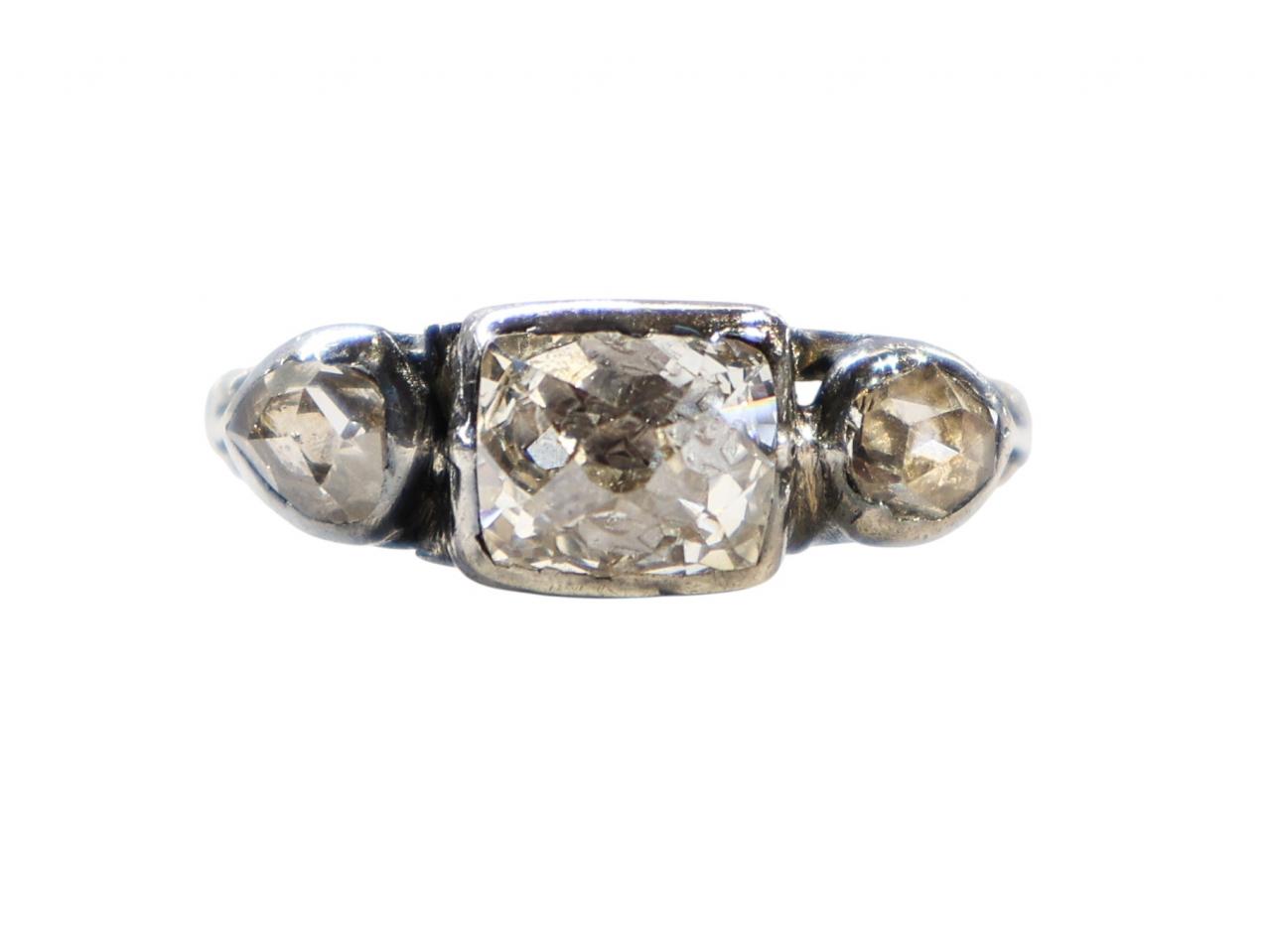
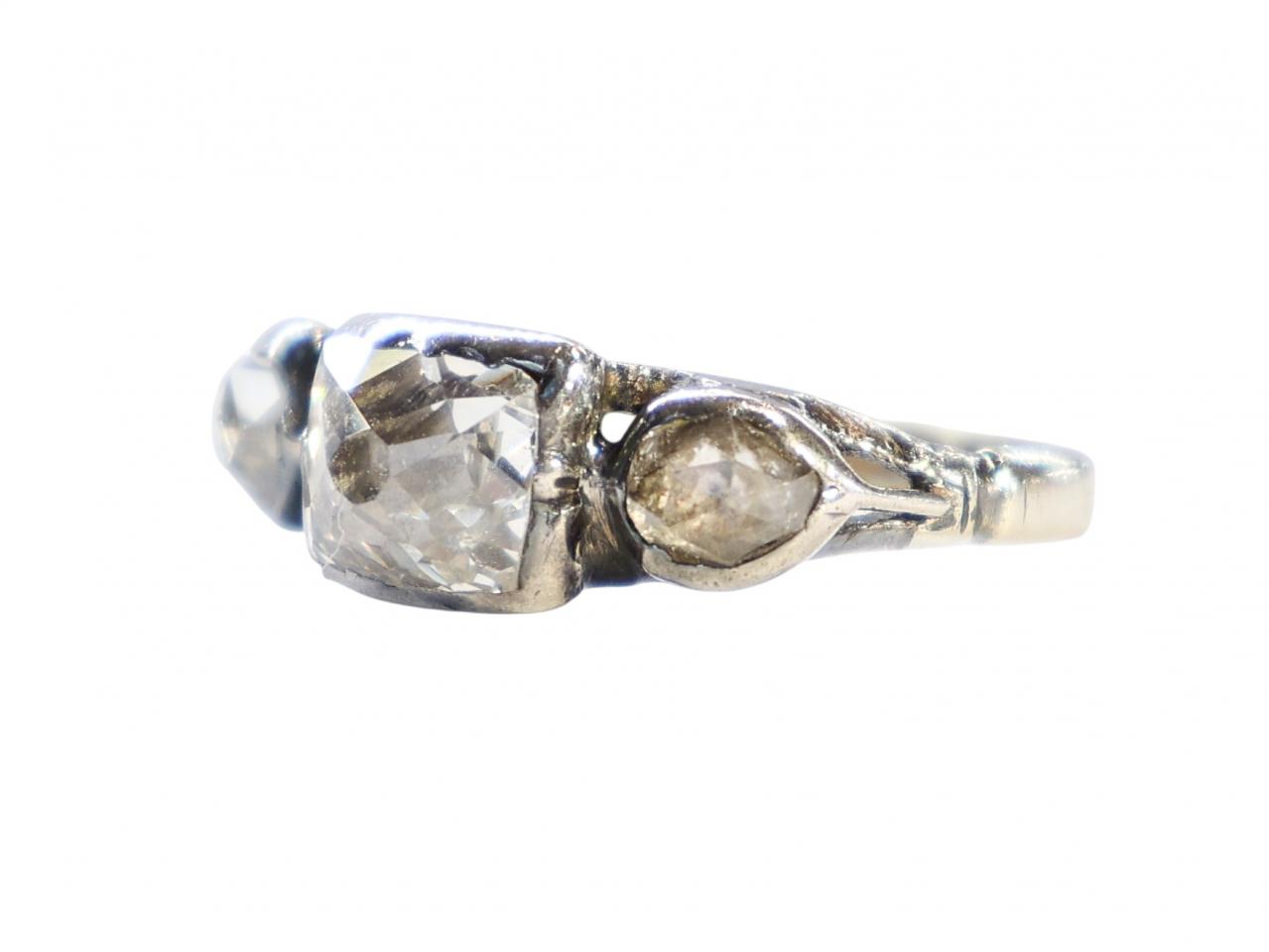
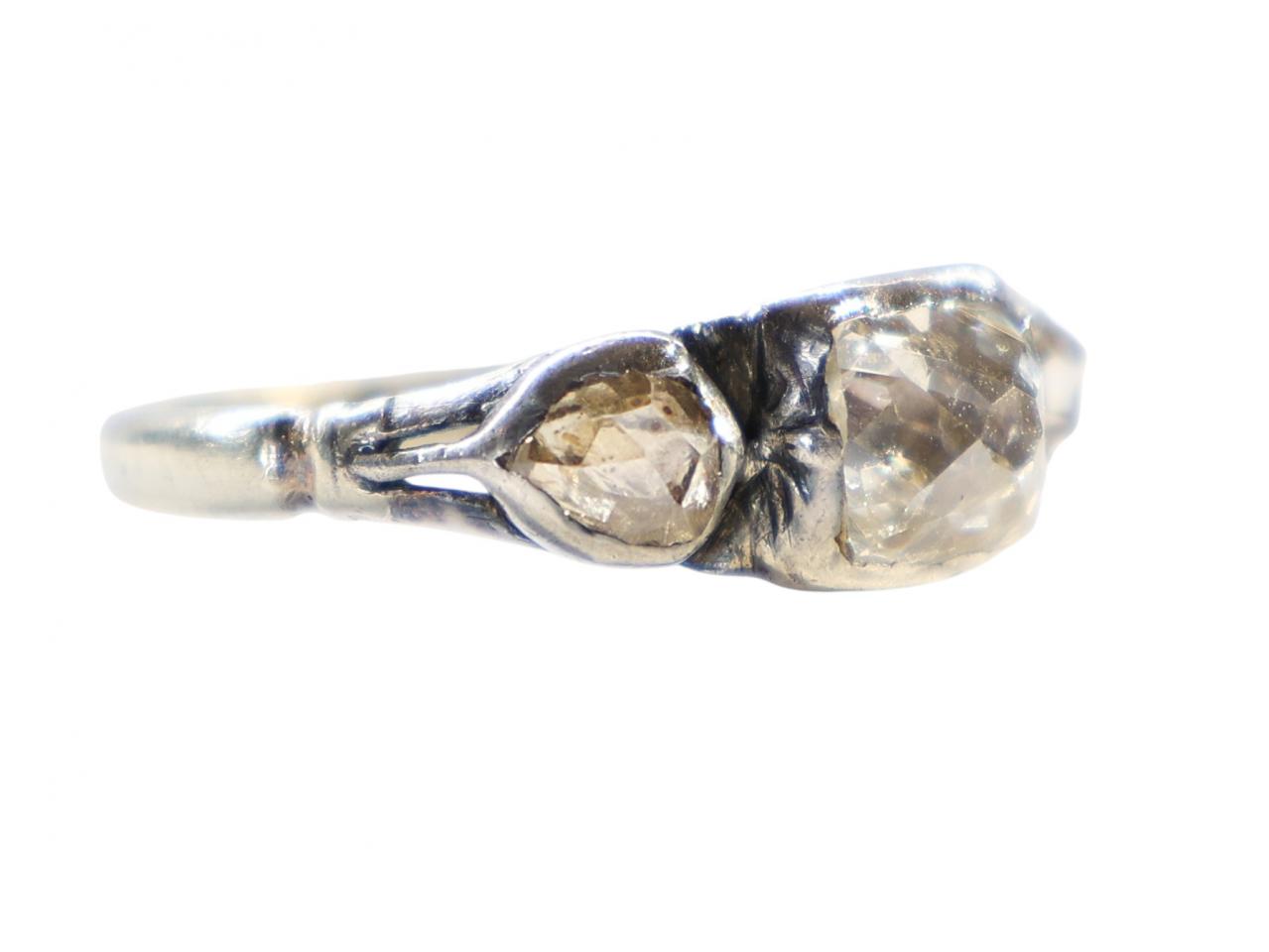
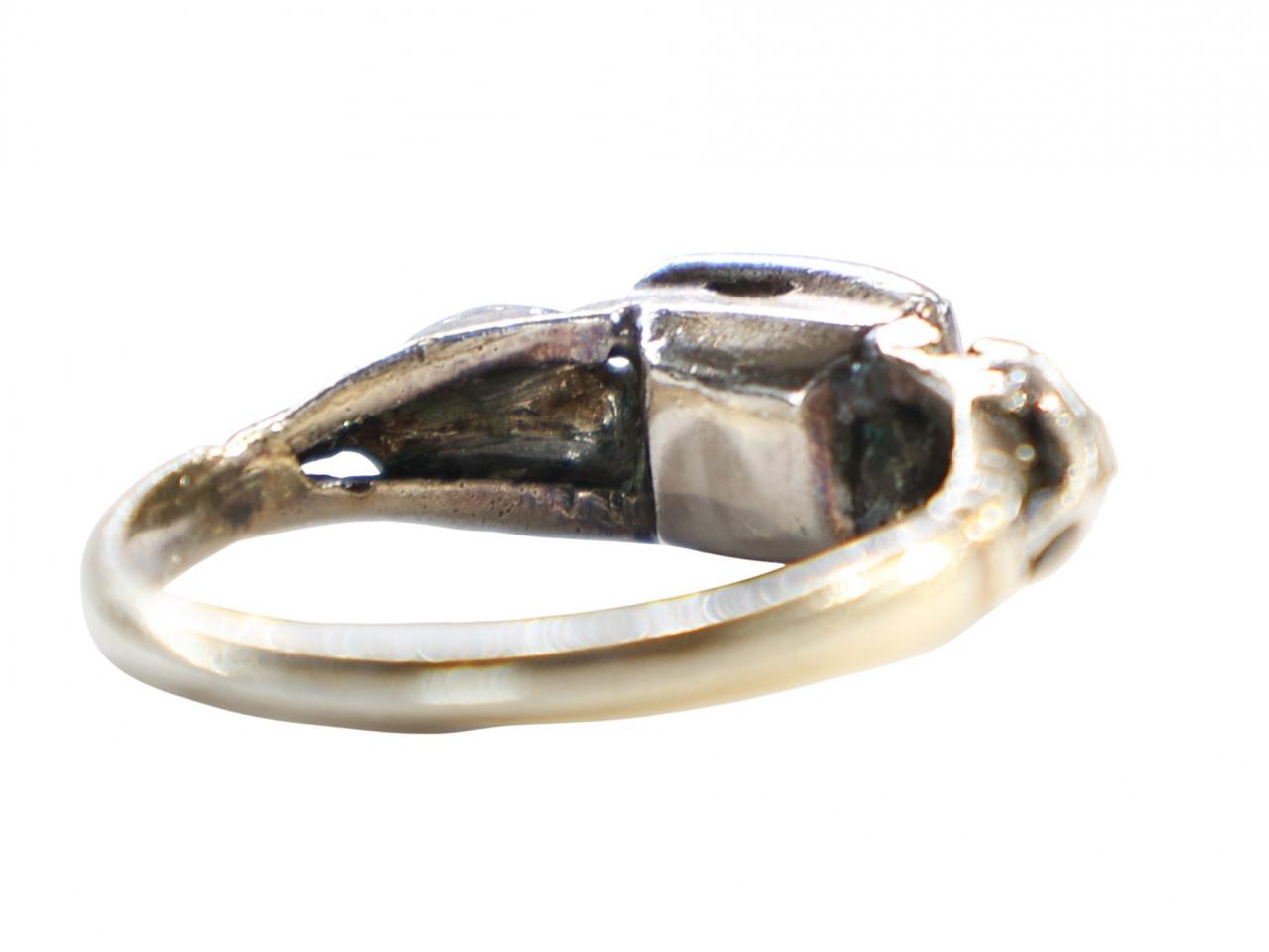
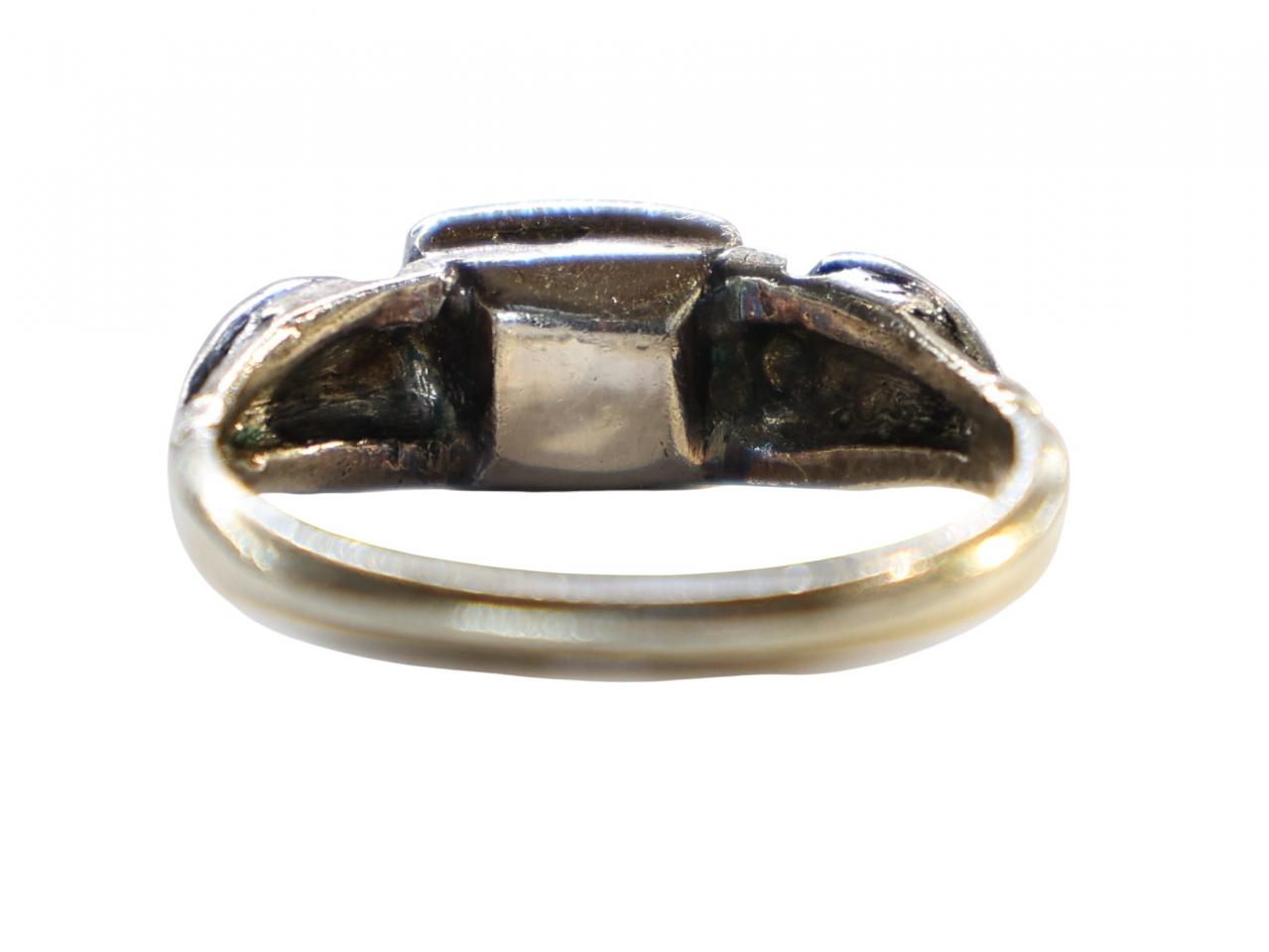
A Georgian three stone diamond ring featuring a cushion-shaped old mine cut diamond flanked by two rose cut diamonds. The ring is constructed in silver on gold, the standard practice in the Georgian era when diamonds were always set in silver to complement their white sparkle while gold provided strength to the shank.
The centre stone is set in a closed-back collet, a hallmark of Georgian diamond jewellery. Before electric light, jewellers would place reflective foil behind diamonds to maximise their brilliance by candlelight. The cushion shape with its high crown and small table is typical of hand-cut diamonds from this period, each one shaped to retain maximum weight from the rough crystal rather than to a standardised pattern.
The flanking rose cuts are set in elegant pear-shaped collets that flow into scrolled shoulders. Rose cuts have no pavilion, just a flat base and a domed crown of triangular facets, giving them a soft, subtle shimmer quite different from the fire of modern brilliant cuts. They were the dominant diamond cut from the 16th to 19th centuries.
Georgian jewellery of this quality is increasingly rare. Pieces from this era were often broken up for their stones or melted down, making intact survivors like this genuinely special finds.
The centre stone is set in a closed-back collet, a hallmark of Georgian diamond jewellery. Before electric light, jewellers would place reflective foil behind diamonds to maximise their brilliance by candlelight. The cushion shape with its high crown and small table is typical of hand-cut diamonds from this period, each one shaped to retain maximum weight from the rough crystal rather than to a standardised pattern.
The flanking rose cuts are set in elegant pear-shaped collets that flow into scrolled shoulders. Rose cuts have no pavilion, just a flat base and a domed crown of triangular facets, giving them a soft, subtle shimmer quite different from the fire of modern brilliant cuts. They were the dominant diamond cut from the 16th to 19th centuries.
Georgian jewellery of this quality is increasingly rare. Pieces from this era were often broken up for their stones or melted down, making intact survivors like this genuinely special finds.
Product Type:
Ring
Time-Period:
Georgian 1714-1830
We offer free worldwide delivery. It is always tracked. We almost always ship the piece within 3 days. Then delivery is usually 3-5 days. If we need to adjust the size of a piece beforehand it may take a little longer. The shipping is fully insured until received or signed for. If you are in a rush let us know at [email protected] and we will try and accommodate!




 eCommerce Development